My achievements

at

EXCO Good Games

  • Helped define the founding concept for EXCO while the studio was being incubated at ParlayBay.

  • Worked on the vision and positioning: not another iCasino game producer, but a full rethink of what these games should be.

  • Designed the UX strategy around player transparency, making sure mechanics, RTP and rules were visible where players actually needed them, not buried in a help modal.

  • Benchmarked the main iCasino studios, Pragmatic Play, Relax Gaming, NoLimitCity and Hacksaw Gaming, to understand what the market was doing wrong and where EXCO could do something different.

  • Contributed to the UI direction for EXCO's first game concepts.

  • Set the foundations for a studio that treats player trust as an actual product feature, not a disclaimer.

What I learnt

Competitive benchmarking in iCasino game production

  • How to read a competitor's game and understand the design logic underneath it.

  • Spotting the patterns studios use to obscure information, and figuring out how to reverse them!

  • Understanding what makes a game feel trustworthy versus what makes it feel shady. The difference is always intentional.

Building a studio vision before the product exists

  • The brief doesn't exist at this stage! You have to write it yourself.

  • Getting the concept right before opening Figma saves a lot of pain later. Draw or Figjam more,

  • How to align people around a direction when there's nothing concrete to show yet.

Game UX and transparency design

  • Making game information readable without overloading the screen is harder than it sounds.

  • You can show players everything they need and still make the game feel exciting. It's not one or the other.

  • How to think about information hierarchy when the product is a game, not a platform.

iCasino game UI

  • Game UI is its own discipline. Platform UX thinking doesn't transfer directly.

  • Every screen state is a product moment with its own stakes.

  • Keeping visual identity consistent across game titles when there's no established design system yet.

Are you interested? Keep reading below!

About

EXCO Good Games

My experience there:

2024ish - 2025

Category

iGaming

Related link (opens a new tab)

Visit Site

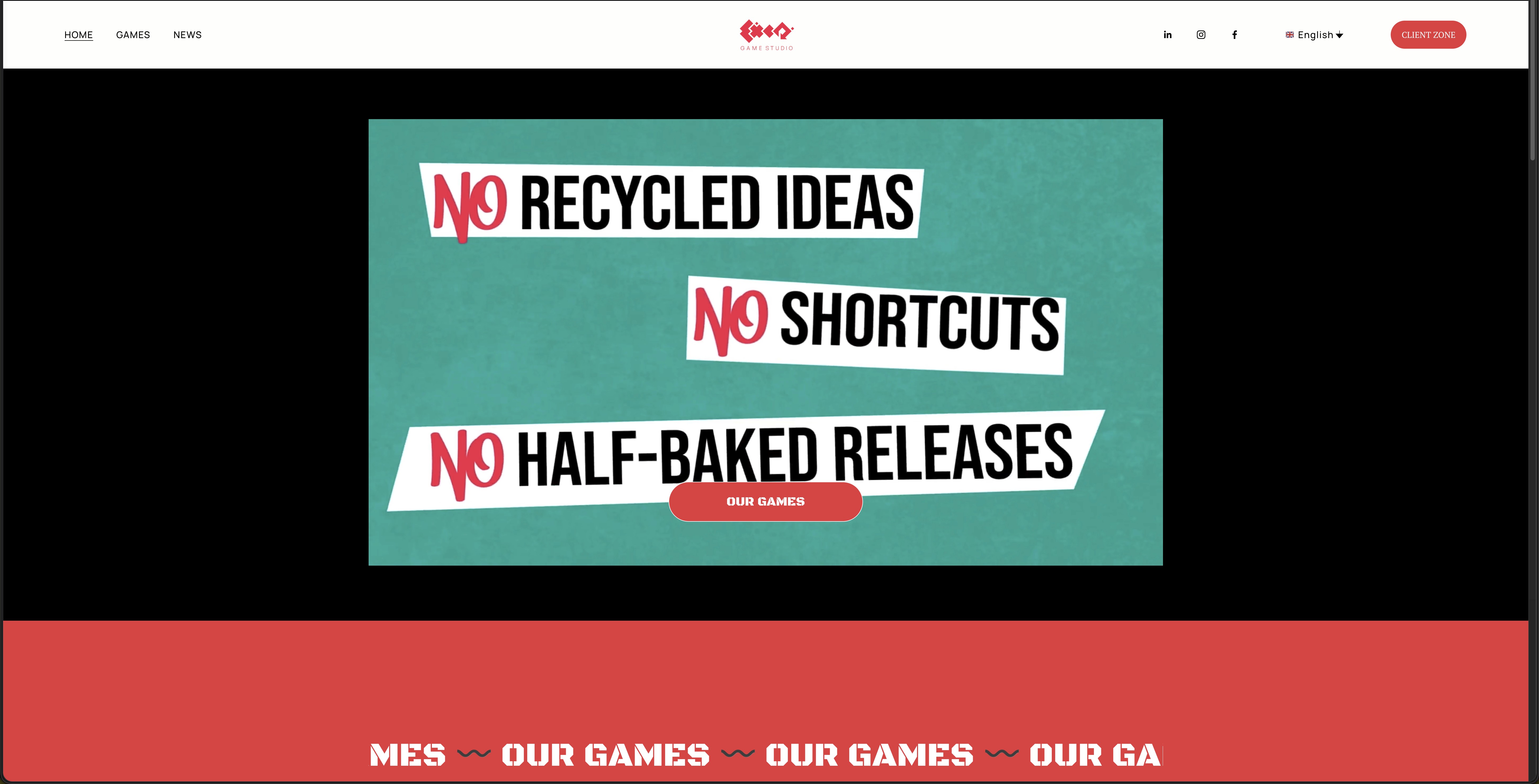
EXCO was incubated at ParlayBay with one clear purpose: build iCasino games that don't treat players like marks. Cut the BS.

The whole industry runs on information asymmetry. Players spin, they win or lose, and most of the time they don't really understand why. Studios like Pragmatic Play have built a very good business on that. EXCO thinks that's a mistake.

The founding idea was simple. Show players everything. How the game works, what the RTP is, what the odds are doing at any given moment. Not in a help screen nobody opens. Right there, in the experience.

That changes what the games feel like. And it changes what the studio is.


  • Transparency by design: game mechanics and statistics are part of the experience, not hidden behind a question mark icon.

  • Built on trust: the bet is that players who understand what they're playing will engage more and stay longer.

  • A different kind of studio: EXCO isn't competing on volume or spectacle. It's making a different argument about what iCasino games can be.

Key Research outcomes

  • Competitive benchmarking across the main iCasino game producers.

  • UX transparency framework defining how game information surfaces in play.

  • UI language and visual direction for EXCO's founding game concepts.

0

+

Competitive Touchpoints Benchmarked

Competitive Touchpoints Benchmarked

<

0

months

Studio Vision & UX Foundation Built

Studio Vision & UX Foundation Built

Competitive Benchmarking & Strategy

Competitive Benchmarking & Strategy

My work started with a close look at how the main iCasino game producers were designing and presenting their games. The goal was to understand what the whole market was doing, and find the gap EXCO could actually own.

  • Pragmatic Play: market leader by volume. High-production slots built around volatility mechanics and visual noise. RTP exists somewhere in their help docs. Nobody reads it.

  • Relax Gaming: stronger visual identity, same fundamental issue. Game mechanics designed to serve the operator, not the player.

  • NoLimitCity: genuinely innovative volatility design, cult following among players. Still no meaningful transparency layer anywhere in the experience.

  • Hacksaw Gaming: the closest to EXCO's visual energy. Information architecture still built around what to show and what to quietly leave out.

The pattern was consistent. Games are designed to extend sessions through opacity. EXCO's bet was that the opposite approach, giving players actual clarity, was not just more honest but also a stronger long-term retention play.

Competitive Benchmarking & Strategy

My work started with a close look at how the main iCasino game producers were designing and presenting their games. The goal was to understand what the whole market was doing, and find the gap EXCO could actually own.

  • Pragmatic Play: market leader by volume. High-production slots built around volatility mechanics and visual noise. RTP exists somewhere in their help docs. Nobody reads it.

  • Relax Gaming: stronger visual identity, same fundamental issue. Game mechanics designed to serve the operator, not the player.

  • NoLimitCity: genuinely innovative volatility design, cult following among players. Still no meaningful transparency layer anywhere in the experience.

  • Hacksaw Gaming: the closest to EXCO's visual energy. Information architecture still built around what to show and what to quietly leave out.

The pattern was consistent. Games are designed to extend sessions through opacity. EXCO's bet was that the opposite approach, giving players actual clarity, was not just more honest but also a stronger long-term retention play.

Vision & Studio Positioning

Vision & Studio Positioning

Before any UI work started, there was a harder question to answer: what does this studio actually stand for, and how does that become real design decisions?

This is the work most studios skip. They go straight to screens and then wonder why everything feels inconsistent later.

  • Defined the core UX principles for the studio: information when it matters, clarity without killing the flow, trust as a retention mechanic, not a compliance checkbox.

  • Articulated the product position: not "better slots" but "games you can understand." A gap in the market that was real and that EXCO could credibly own.

  • Mapped what transparency actually looks like at each stage: before play, during play, on outcomes, on bonuses, on terms.

  • Set the creative direction: bold enough to compete visually, restrained enough not to undermine the honesty the brand was built on.

Getting this right before touching any screens was the whole job.

Vision & Studio Positioning

Before any UI work started, there was a harder question to answer: what does this studio actually stand for, and how does that become real design decisions?

This is the work most studios skip. They go straight to screens and then wonder why everything feels inconsistent later.

  • Defined the core UX principles for the studio: information when it matters, clarity without killing the flow, trust as a retention mechanic, not a compliance checkbox.

  • Articulated the product position: not "better slots" but "games you can understand." A gap in the market that was real and that EXCO could credibly own.

  • Mapped what transparency actually looks like at each stage: before play, during play, on outcomes, on bonuses, on terms.

  • Set the creative direction: bold enough to compete visually, restrained enough not to undermine the honesty the brand was built on.

Getting this right before touching any screens was the whole job.

Design & Transparency Architecture

Design & Transparency Architecture

Before any UI work started, there was a harder question to answer: what does this studio actually stand for, and how does that become real design decisions?

This is the work most studios skip. They go straight to screens and then wonder why everything feels inconsistent later.

  • Defined the core UX principles for the studio: information when it matters, clarity without killing the flow, trust as a retention mechanic, not a compliance checkbox.

  • Articulated the product position: not "better slots" but "games you can understand." A gap in the market that was real and that EXCO could credibly own.

  • Mapped what transparency actually looks like at each stage: before play, during play, on outcomes, on bonuses, on terms.

  • Set the creative direction: bold enough to compete visually, restrained enough not to undermine the honesty the brand was built on.

Getting this right before touching any screens was the whole job.

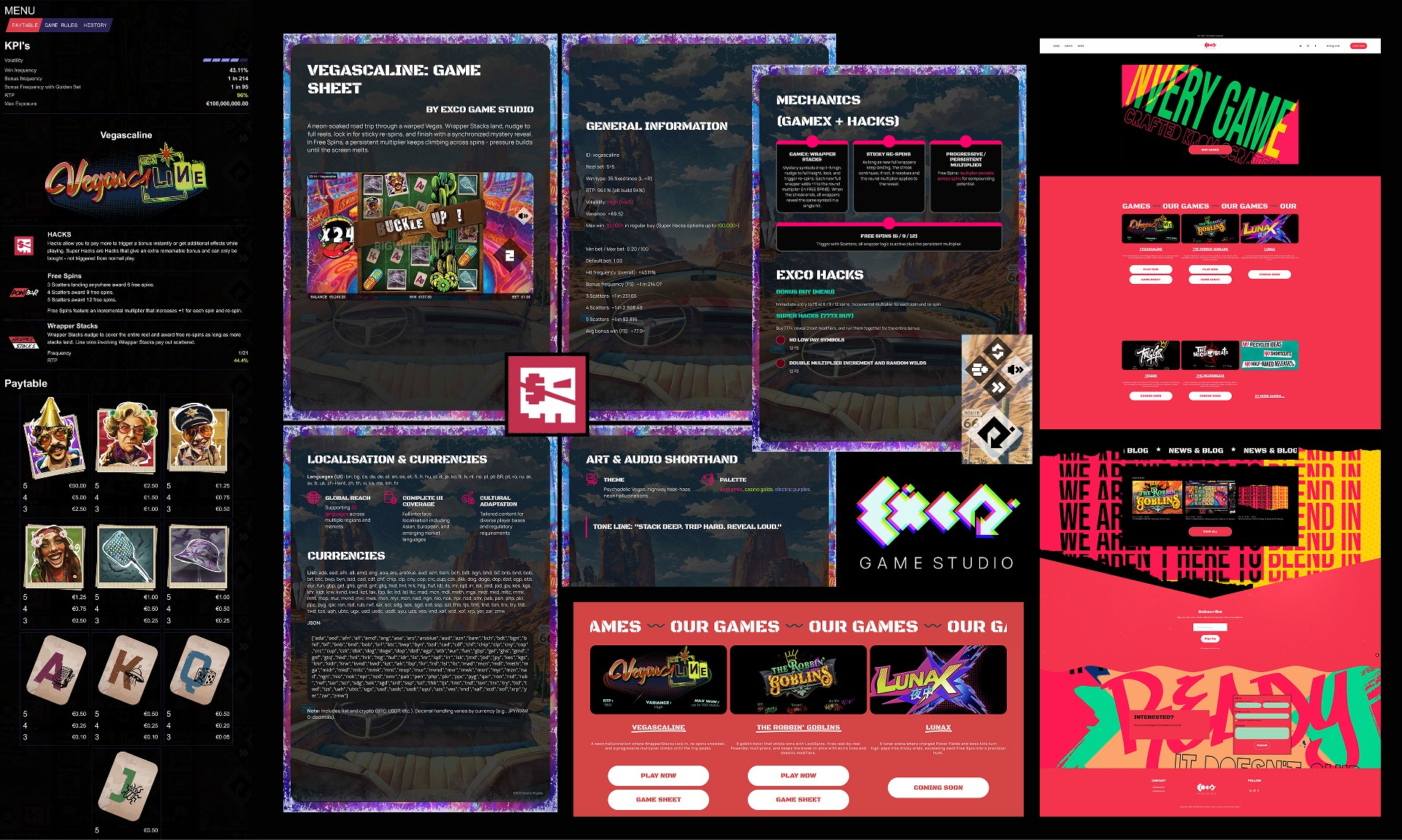
One of EXCO games I was directly involved in

Design & Transparency Architecture

Before any UI work started, there was a harder question to answer: what does this studio actually stand for, and how does that become real design decisions?

This is the work most studios skip. They go straight to screens and then wonder why everything feels inconsistent later.

  • Defined the core UX principles for the studio: information when it matters, clarity without killing the flow, trust as a retention mechanic, not a compliance checkbox.

  • Articulated the product position: not "better slots" but "games you can understand." A gap in the market that was real and that EXCO could credibly own.

  • Mapped what transparency actually looks like at each stage: before play, during play, on outcomes, on bonuses, on terms.

  • Set the creative direction: bold enough to compete visually, restrained enough not to undermine the honesty the brand was built on.

Getting this right before touching any screens was the whole job.

One of EXCO games I was directly involved in

Game UI Direction & Visual Language

Game UI Direction & Visual Language

With the vision locked, the work moved into how the transparency strategy would actually function inside the games themselves.

The challenge was finding the right moment for each piece of information, surfacing it naturally, without turning the game into a stats dashboard nobody wants.

  • Pre-game information layer: RTP, volatility, and mechanic explanations visible before the first spin, in plain language, not buried in a modal.

  • In-game state design: key information present throughout play without breaking immersion. Every element earns its place.

  • Bonus and feature clarity: rules and conditions explained at the moment they become relevant, not three screens earlier when nobody's paying attention yet.

  • Terminology: no jargon that only makes sense if you've been playing iCasino games for years. The experience had to work for a first-time player without talking down to an experienced one.

Game UI Direction & Visual Language

With the vision locked, the work moved into how the transparency strategy would actually function inside the games themselves.

The challenge was finding the right moment for each piece of information, surfacing it naturally, without turning the game into a stats dashboard nobody wants.

  • Pre-game information layer: RTP, volatility, and mechanic explanations visible before the first spin, in plain language, not buried in a modal.

  • In-game state design: key information present throughout play without breaking immersion. Every element earns its place.

  • Bonus and feature clarity: rules and conditions explained at the moment they become relevant, not three screens earlier when nobody's paying attention yet.

  • Terminology: no jargon that only makes sense if you've been playing iCasino games for years. The experience had to work for a first-time player without talking down to an experienced one.

Alejandro Luna Ribero |  Product Designer, UX/UI & Game Designer

Alejandro Luna
UX/UI Designer &
Producer

©2026 ALE LUNA (RIBERO) DESIGN/

BACK TO TOP

©2026 ALE LUNA (RIBERO) DESIGN/

BACK TO TOP