My achievements
Redesigned onboarding, missions and wallet flows from validated user research — active user engagement increased 160% and 7-day retention by 27%.
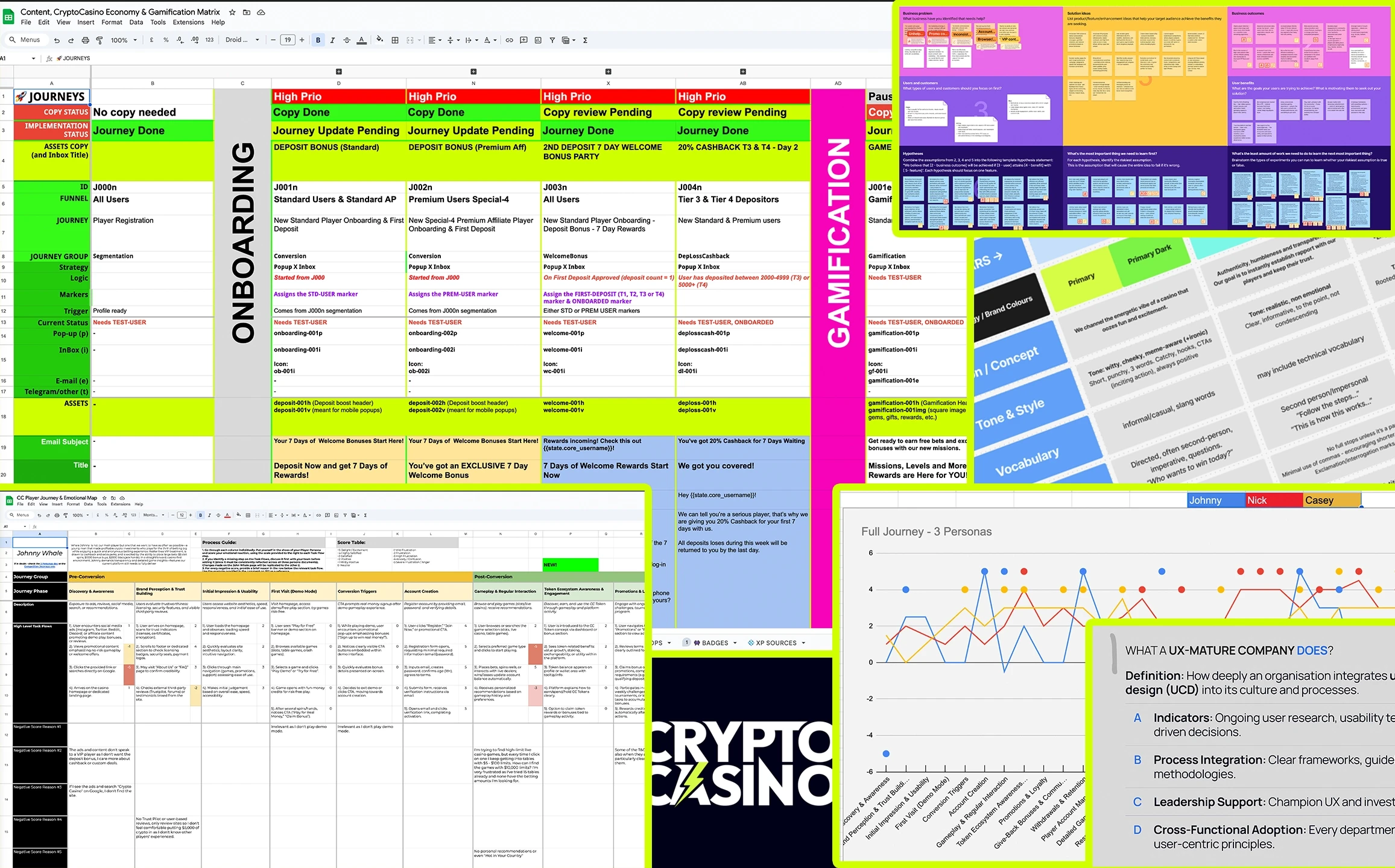
Established a player-centred UX maturity model connecting company goals to actual user journeys, persona research and pain-point tracking.
Built a behavioural analytics framework with weekly KPI reviews across product, engineering and marketing — support tickets dropped 40% through data-informed prioritisation.
Framed all design investments in direct business terms — activation improvements tied to revenue, retention improvements tied to LTV.
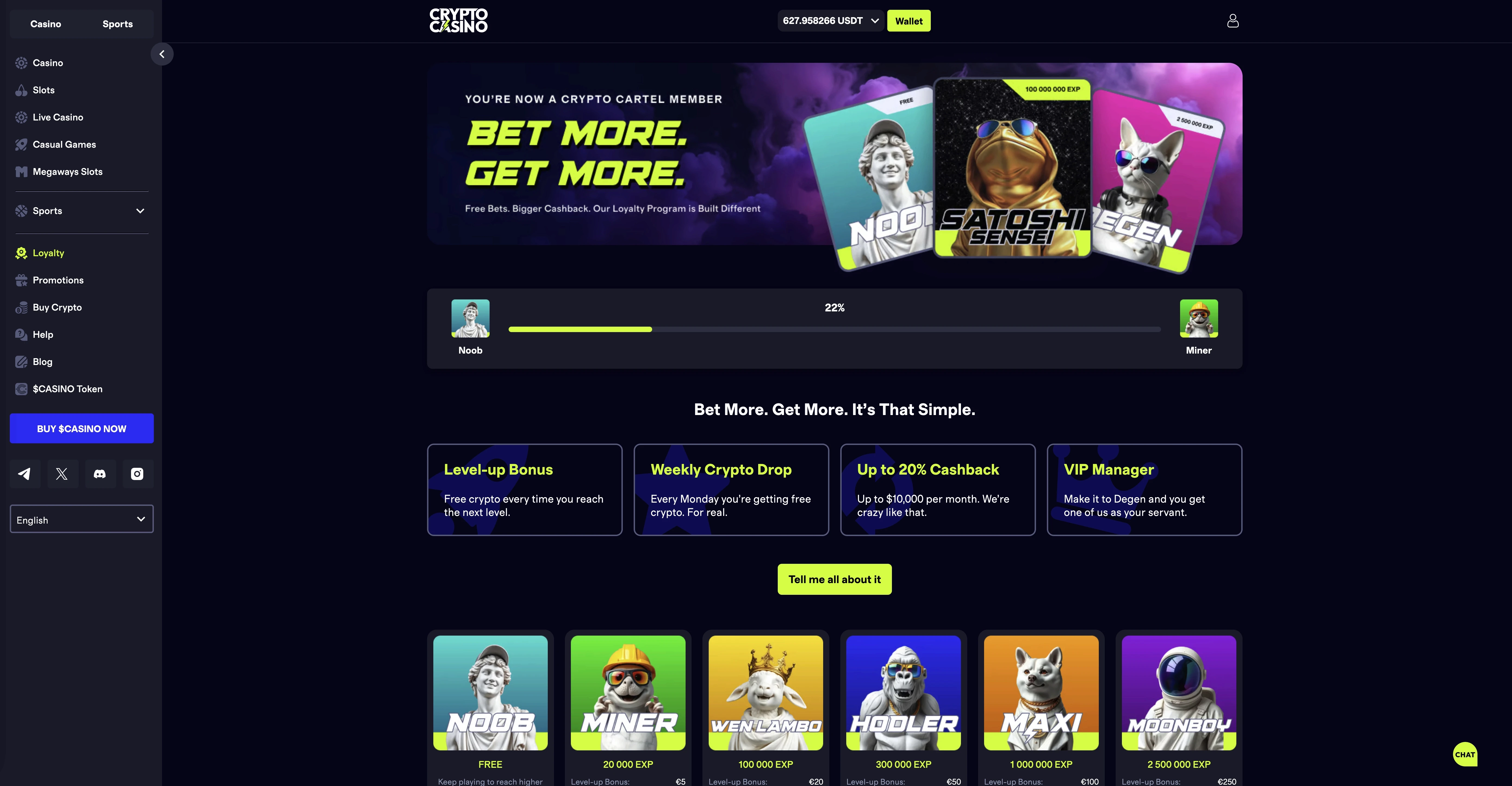
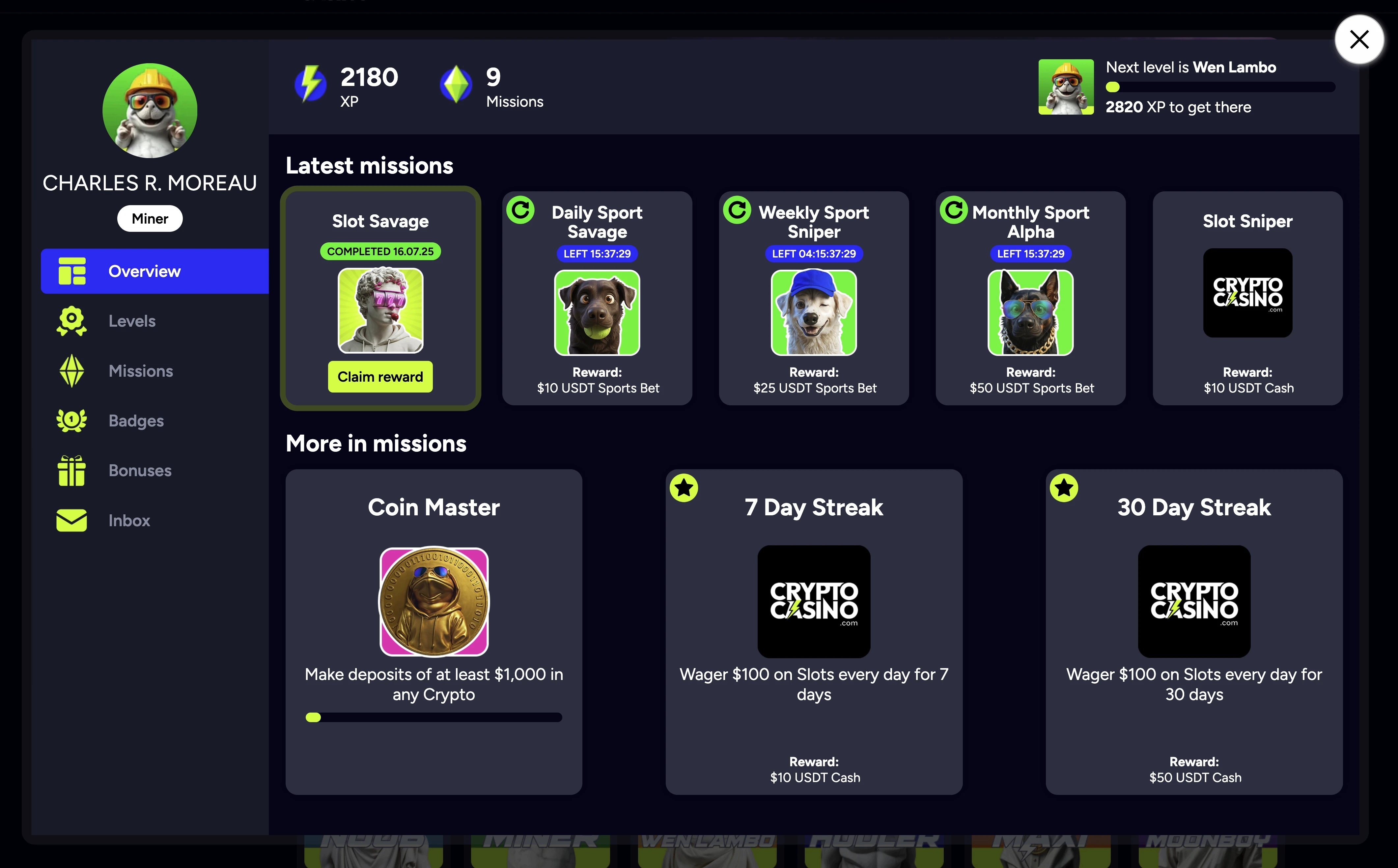
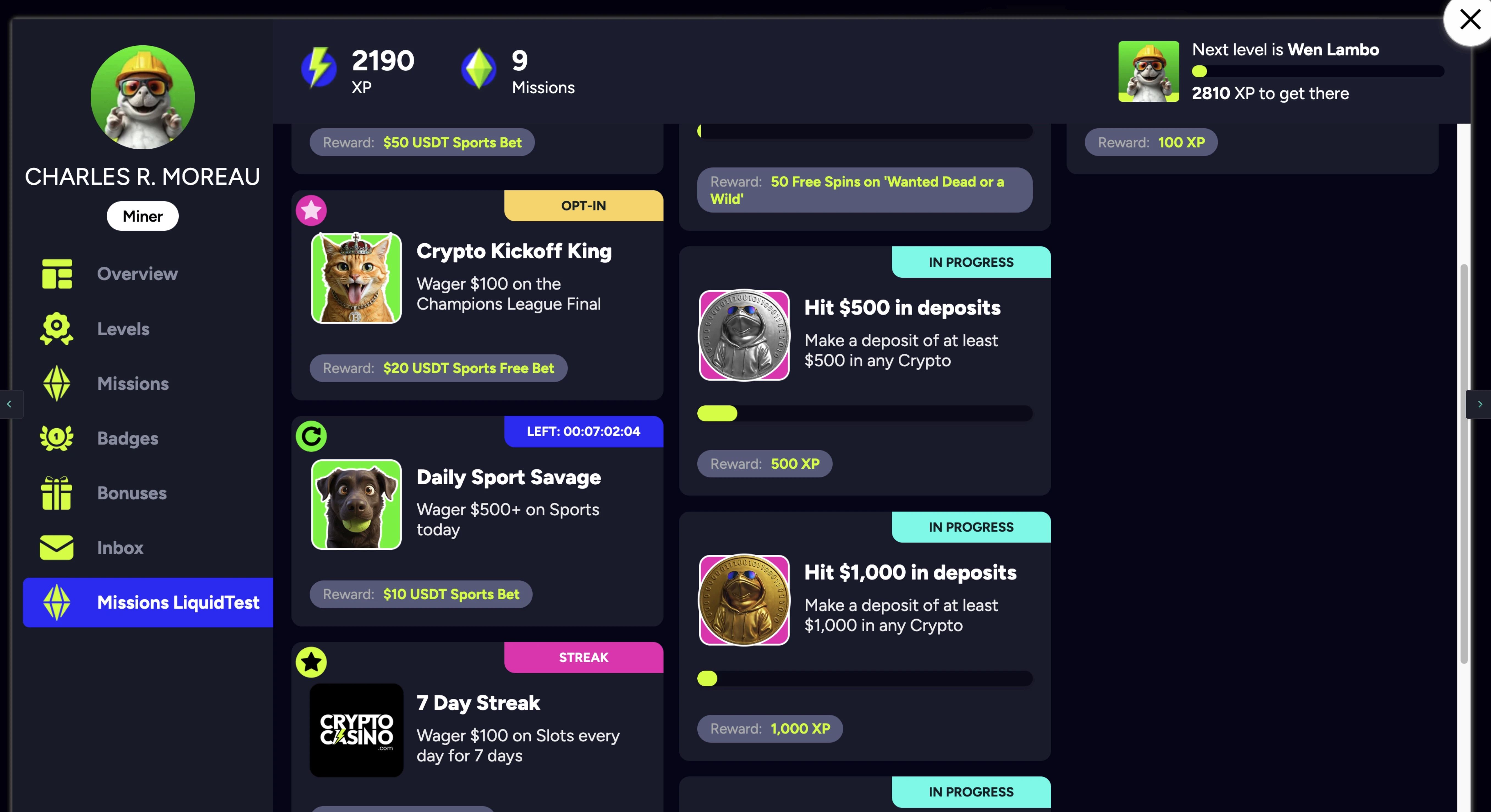
Designed and implemented end-to-end gamification layer: loyalty progression, missions, live-ops nudges and event activations.
Ran workshops and design sprints across product, engineering and marketing to align on user journeys and feature priorities.
What I learnt
Emotional journey scoring as a design tool
Scoring every touchpoint -5 to +5 across 50+ journey moments makes pain points concrete and comparable — it turns “this feels wrong” into a ranked list the whole team can act on.
The same touchpoint scores completely differently depending on the persona performing it. That forces precision: you have to decide who you’re optimising for at each moment, not assume everyone reacts the same way.
Aggregating scores across a large journey map reveals systematic problems — the kind that show up in multiple places for the same root cause — not just individual friction points.
Designing gamification for fundamentally different players
A crypto whale and a methodical grinder want almost opposite things from a loyalty system. One system can serve both if the backend mechanics are shared but the surface layers — framing, feedback, triggers — are distinct.
VIP progression that doesn’t feel transparent will lose the exact players who value it most. The perceived opacity is a feature to some users, but it’s a dealbreaker to the high-value methodical ones.
Mission design works best when it adapts to individual player cadence, not a fixed weekly schedule designed for an average user who doesn’t actually exist.
Crypto-native UX is trust UX
Wallet operations and KYC flows are the moments where crypto users decide whether to trust the platform or leave. Friction there isn’t just a UX inconvenience — it’s a trust signal.
Provably fair mechanics need to be surfaced actively, not just present somewhere. If players never encounter them naturally, the trust advantage the platform built is invisible to the people it’s supposed to reach.
Benchmarking Stake, Shuffle, NoLimitCity and Bet365 made the crypto audience’s low tolerance for slow withdrawals and cluttered interfaces undeniable. The design standard is set by the best product in the market, not the average.
Are you interested? Keep reading below!
About
Crypto Casino
Role
Lead UX Designer & Product Strategist
My experience there:
Feb 2025 – Sep 2025
Category
iGaming
Related link (opens a new tab)
Visit Site
Crypto Casino is an international cryptocurrency gaming platform designed to bridge traditional casino experiences with blockchain technology. Built for the crypto-native audience, it offers more than just games by creating an ecosystem where players maintain complete control over their digital assets through decentralized transactions.
Empowers players: Instant crypto deposits and withdrawals, provably fair gaming mechanics, and complete anonymity for privacy-focused gaming experiences.
Connects communities: Social features, tournaments, and token-based loyalty systems that reward long-term engagement and community participation.
Drives innovation: Real-time gamification through integrated mission systems, personalized reward progression, and adaptive promotional campaigns tailored to individual player behavior.
Key Research Outcomes:
Complete emotional journey scoring for all persona types
Identified 50+ critical touchpoints requiring optimization
Strategic framework for retention and player lifecycle management
+
+
<
months